
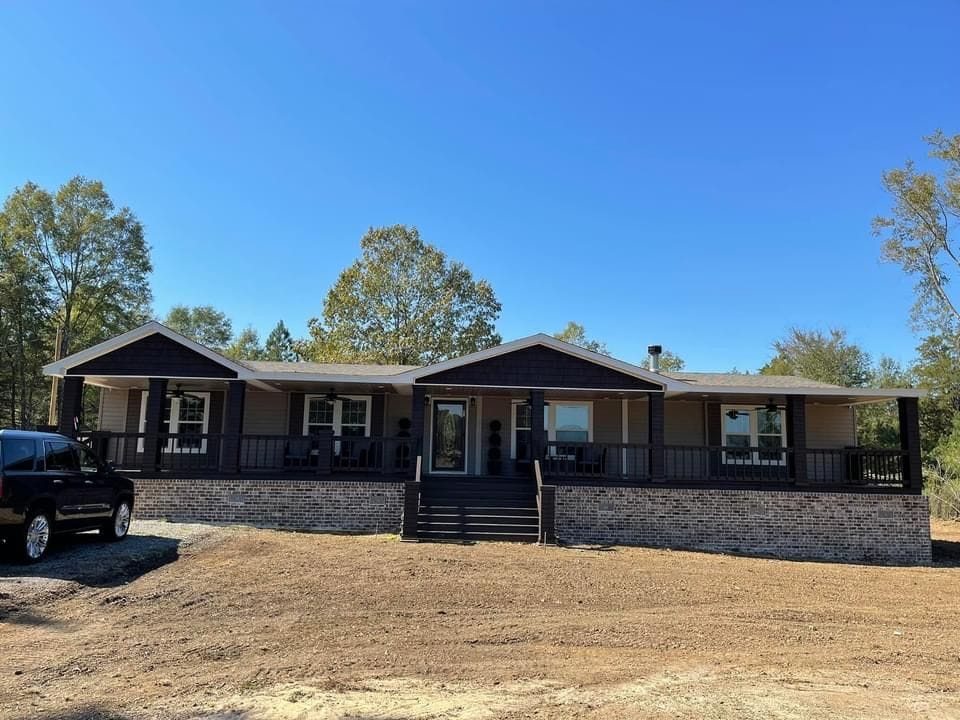
The Lot Walk: Seeing the Foundation Difference Firsthand
Let’s step out of the office for a minute. When buyers come visit us here in 2026, I like to take them on a quick walk through three different homes on our lot to physically show them how foundation choices completely change the game.
First, we step into a budget-friendly single-wide. I tell buyers to bounce on their heels and feel the floor. Underneath, this home is set up on a standard Pier-and-beam system. It is incredibly cost-effective, lightning-fast to install, and leaves plenty of room in the crawlspace to easily access plumbing. If you save money intelligently on this kind of foundation, you can afford smart upgrades that impact your daily life, like a premium off-grid energy setup.
Next, we walk into a beautiful, family-sized double-wide. The floor feels more rigid, almost like a site-built house. I point out that a double-wide represents a larger investment, and this is where the conversation has to shift. If you want this home to hold its value and qualify for top-tier mortgages, we need to look beyond standard stacked blocks. We have to talk permanent foundations.
Finally, we tour our premium model—a sprawling, drywall-finished masterpiece. I remind buyers that placing a high-end home like this on an engineered permanent foundation transforms it from personal property into real estate. It’s the difference between buying a vehicle and buying a piece of property.
What is the Difference Between Standard Piers and a Permanent Foundation?
Short answer: A standard pier set rests the home on stacked concrete blocks (piers) with standard ground anchors. A permanent foundation is an engineered system where the home is permanently attached to the earth, distributing the load so it cannot be moved without major structural alteration.
When you use standard piers, the home relies on gravity and a basic Anchoring and tiedown system to stay put. It works perfectly fine for many rural setups. However, an engineered permanent system physically anchors the home’s steel chassis to a poured Perimeter concrete footing or structural slab. Once it is attached this way, it’s considered permanently affixed to the land.
Why Your Foundation Choice Dictates Your Financing
I recently sat down with a young couple who were agonizing over their site preparation budget. They were locked into a tough upgrade decision: stretch their monthly mortgage payment to pour a full concrete foundation, or stick with a standard pier setup. The deciding factor wasn’t just budget; it was their loan.
If you are trying to secure traditional lending, your foundation must meet strict FHA/VA lending requirements. These government-backed loans require the foundation to comply with the HUD Permanent Foundations Guide (PFG-75). If you just use standard blocks and dirt anchors, the bank considers your home “chattel” (like an RV or car). By upgrading to a permanent setup, you convert the home to real property, unlocking lower interest rates and 30-year mortgage terms.
For more specific insights on how this affects your closing, I highly recommend reading What Georgia First-Time Home Buyers Need to Know About Foundation Integrity Before Closing (the core structural principles apply nationwide).
Climate, Soil, and Structural Longevity
Short answer: Permanent foundations protect your double wide from soil shifting, frost heaves, and severe weather much better than a standard pier setup.
Your local climate plays a massive role in this decision. If you live in an area with freezing winters, your footings must be poured below the local Frost line depth. If they aren’t, the ground will freeze, expand, and push your home out of level. A permanent foundation secures your home deep into stable soil.
Site preparation is a big part of this. It’s not just about leveling dirt; you must ensure the ground is safe and stable. In some older rural or industrial-adjacent sites across the nation, you must verify the soil is safe before digging deep footings, occasionally referencing federal safety protocols like the Superfund Residential Lead Sites Handbook to ensure you aren’t disturbing contaminated ground. Furthermore, ensuring HUD-7550 code compliance guarantees your home can withstand local wind zones and snow loads.
Tradeoffs: Which Foundation is Best for Your Double Wide?
Deciding between these two options comes down to your primary goals as a homeowner.
- Best for Standard Piers: Budget-conscious buyers, private land setups without strict zoning, folks paying cash or using specialized chattel loans, and those who want a faster, simpler site preparation process.
- Watch out for (Standard Piers): Higher interest rates on chattel loans, more frequent re-leveling needs, and lower long-term resale value compared to real estate.
- Best for Permanent Foundations: Families looking to maximize resale value, buyers relying on FHA/VA loans, and those placing a premium double-wide in areas with extreme frost or high winds.
- Watch out for (Permanent Foundations): Significantly higher upfront costs and a much longer site-prep timeline involving soil tests, engineers, and concrete curing.
Need help finalizing your lot plans, securing financing, or coordinating site prep? Reach out to our team directly via our contact page. And if you are outfitting your new property with outbuildings or need to haul heavy equipment to your site, take a look at our 8.5 x 28 ATC ROM 500 Aluminum Race Car Trailer w/ Premium Escape Door to get the job done right.
FAQ
Can I upgrade a pier and beam foundation to a permanent one later?
Short answer: Yes, a “retrofit” is possible. You can install an engineered tie-down system and perimeter footings after the home is set. However, it is almost always more expensive and labor-intensive to pour concrete and dig footings under an existing home than it is to do it properly before the home arrives.
Does a concrete slab automatically count as a permanent foundation?
Short answer: No. Just resting the home on a flat concrete slab does not meet permanent foundation requirements. The home’s steel frame must be permanently anchored to that concrete slab using a system engineered and signed off by a licensed structural engineer to meet FHA/VA guidelines.
How often do I need to re-level a standard pier foundation?
Short answer: Most manufacturers recommend checking the level of a standard pier and beam home 90 days after setup, and then every 3 to 5 years after that. Soil shifts naturally over time, and regular re-leveling prevents structural damage, cracked drywall, and sticky doors.
Are permanent foundations required for single-wides?
Short answer: Generally, no. Most single-wides are financed through home-only (chattel) loans and set up in parks or on private land using standard piers. However, if you are attempting to attach the single-wide to land to get a traditional mortgage, you will still need an engineered permanent foundation.