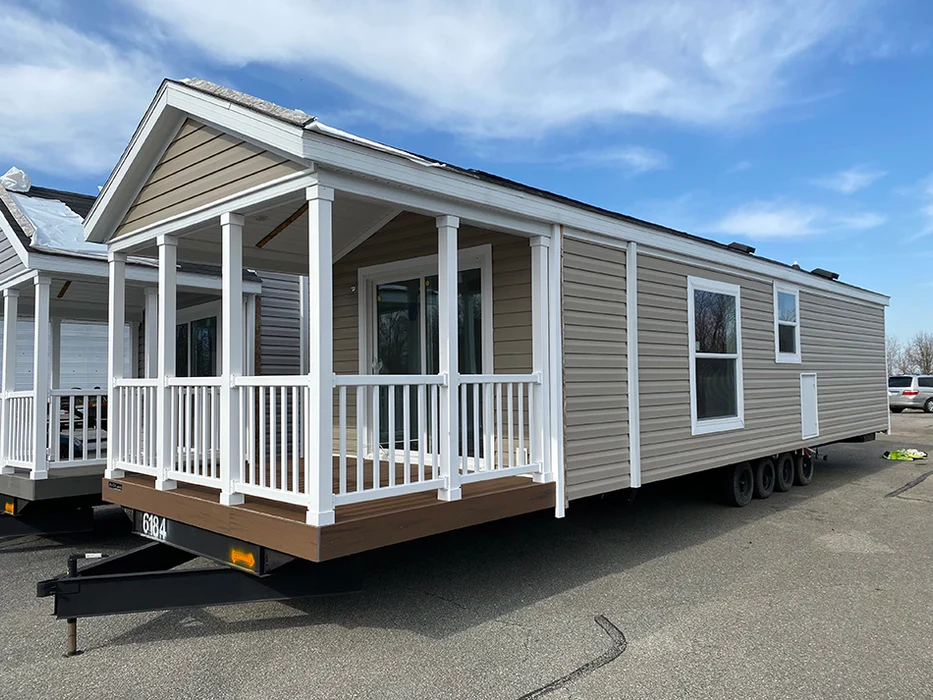
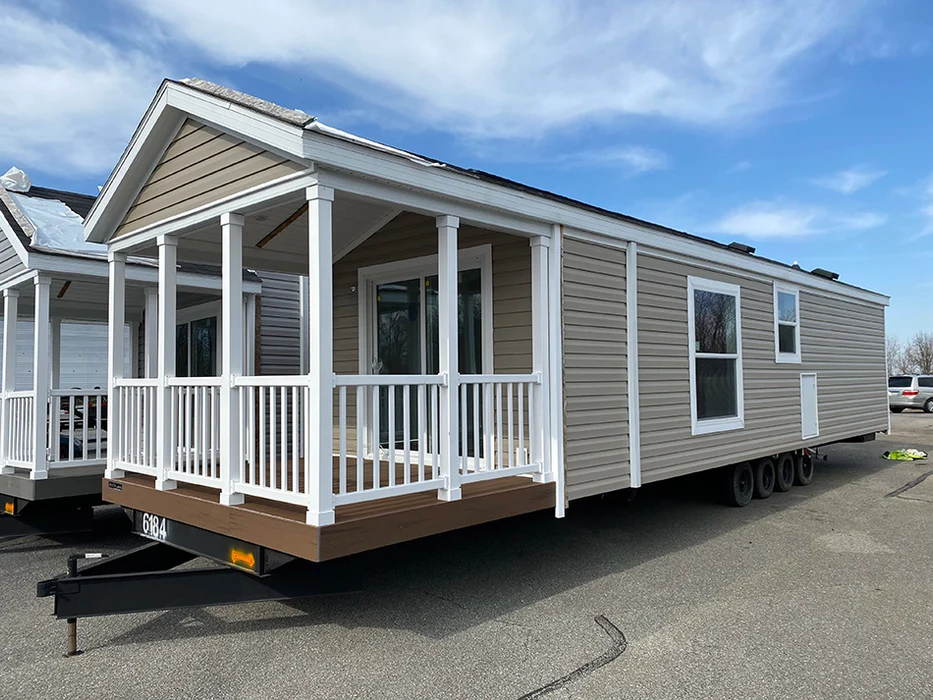
Let’s take a walk through our sales lot here in sunny Florida. I find that the absolute easiest way to understand the critical importance of a proper foundation, leveling, and hurricane compliance is to get down and see it firsthand. As a dealer, I see a lot of foundational repair issues that could have been avoided with a proper initial setup. Today, we’re looking at the underbelly of three different homes right here on the lot: a budget-friendly single-wide, a family-sized double-wide, and a heavy-duty premium model. I’ll point out exactly what keeps these homes anchored securely when the tropical storms roll in.
How Do We Support a Budget-Friendly Single-Wide in High-Wind Zones?
Short answer: Single-wides are secured using a traditional Pier and Beam Foundation where support piers are spaced every 6 to 8 feet along the steel chassis, firmly anchored to the ground to resist wind uplift.
Look under this first home with me. This is one of our most popular, budget-friendly single-wides. When we look underneath, you’re seeing the core of a standard Pier and Beam Foundation. The entire home rides on a massive steel I-Beam, which distributes the weight.
I always tell buyers: don’t let the word “budget” fool you. The state of Florida requires strict tie-down standards regardless of the home’s price tag. The spacing of these concrete masonry unit (CMU) piers isn’t random. We have to look at the local soil’s Load-Bearing capacity. If the soil is sandy and loose, we need broader pads to prevent the home from sinking over time, which is a common repair scenario if neglected.
Why Are the Right Leveling Shims Critical for a Double-Wide?
Short answer: Proper leveling prevents the two halves of a double-wide from shifting independently, which can severely stress the marriage line, warp door frames, and void your factory warranty.
Walking over to this beautiful family-sized double-wide, I want you to look closely at the specific points where the CMU piers meet the steel frame. You’ll see small wedges driven in tight. These are the Leveling Shims, and they are arguably the most important, yet overlooked, part of foundation repair and maintenance.
I cannot stress this enough: a mobile home foundation is only as strong as its weakest link. Even if you have the best CMU piers and ground anchors, using cheap, untreated wood shims instead of proper hardwood or high-impact plastic leveling wedges can cause the home to settle unevenly over time. This stresses the marriage line of double-wide homes and warps door frames. Always ensure your installer is following the manufacturer’s manual and the guidelines laid out in APPENDIX AE MANUFACTURED HOUSING USED AS DWELLINGS.
For a deeper dive into making the right choice for these critical components, check out our guide on Wood vs. Steel Shims: Choosing the Best Foundation Leveling Material for Florida Mobile Homes.
What Makes Our Premium Model Hurricane-Compliant?
Short answer: Premium models in coastal areas utilize heavy-duty galvanized strap tie-downs anchored into reinforced concrete to resist massive uplift forces during a hurricane.
Finally, let’s step over to this heavy-duty premium model. We specifically set this one up to demonstrate coastal compliance. Down here in Florida, we don’t have to worry about digging below the Frost Line to pour our footers like folks do up north. However, we trade ice for wind and water.
If this home were going to a coastal lot, it would need to be installed above the Base Flood Elevation (BFE). To ensure it doesn’t wash away or lift off during a Category 4 storm, the anchoring straps are bolted directly into a massive Reinforced Concrete Footing. The HUD code demands that the tie-down system can handle extreme lateral and uplift forces. If you want to see the specific engineering behind this, I highly recommend reading the federal guidance: [PDF] Protecting Manufactured Homes from Floods and Other Hazards.
Protecting Your Investment and Staying Prepared
Routine foundation inspections and re-leveling are just part of owning a mobile home, but doing it right the first time saves you massive repair bills. And speaking of being prepared for Florida’s wild weather, if you’re upgrading your lot, you’ll want reliable off-grid power when the storms hit. Take a look at our 1000-gallon underground propane tank—it’s the perfect addition to a fully storm-ready, premium home setup.
Frequently Asked Questions
How far apart should mobile home piers be?
Short answer: In most standard setups, piers are placed every 6 to 8 feet along the steel I-beams. However, the exact measurement is strictly dictated by your home’s unique engineering manual and local soil load-bearing capacity.
Can I use regular pine for leveling shims?
Short answer: Absolutely not. Using cheap, soft, or untreated wood like basic pine for shims will lead to compression and rot. You must use approved hardwood or high-impact plastic wedges to maintain level and protect your home’s warranty.
How often should I check my Florida mobile home tie-downs?
Short answer: You should visually inspect your tie-downs and anchors at least once a year, preferably before hurricane season begins in June. Look for slack in the straps, severe rust, or ground anchors that appear to be pulling out of the soil.